
Your youngest daughter can't find her left shoe, the coffee's gone cold on the counter, and it's 7:41 on a Tuesday, eleven minutes later than yesterday, for reasons nobody in the house could quite explain if you asked them. You've been meaning to figure out why some mornings run smoothly and some don't, but there's never time to actually sit down and look at it. Sound familiar?
Now picture the same kind of morning, except at work. You manage patient scheduling for a growing medical clinic with a few locations, and lately the wait times have been creeping up. You open an AI scheduling assistant, feed it a few months of appointment data, and in about four seconds it tells you: average wait time is up from 12 minutes to 27, the variation has more than doubled, and the likely culprit is a pattern where too many new-patient intakes get booked back to back with no buffer.
That's a genuinely useful answer, and it took seconds to get. A few years ago, a data analyst would have spent most of a week pulling that together by hand. Which brings up a question a lot of people are quietly sitting with right now: if a piece of software can do that in four seconds, is it still worth learning Lean Six Sigma?
Give the Machine Its Due
It's worth being honest about this instead of defensive. AI tools really are good at a few specific things: chewing through large amounts of data fast, spotting patterns a person might miss for weeks, and drafting a rough starting point, like a first-pass fishbone diagram or a list of likely causes, almost instantly. None of that is an exaggeration or marketing spin. It's the same territory as software calculating a Cp value or a p-value the moment a test finishes: genuinely useful, genuinely fast, and worth using.
But notice what the clinic's AI assistant actually handed you. It told you what is happening and offered a decent guess at why. It did not tell you what to do about it. That gap between "here's the analysis" and "here's the decision" is exactly where this gets interesting.
Confident Isn't the Same as Correct
Here's the part worth being blunt about: the AI didn't say "here's a possible explanation, worth checking." It said the cause is too many back-to-back new-patient intakes, full stop, delivered with the same flat confidence it would use whether it was right or completely wrong. AI tools are built to sound sure of themselves. They don't hedge the way a cautious analyst would, and they have no built-in instinct for "wait, does this actually match what I know about this specific clinic?"
That's the skill that matters more, not less, as AI gets better: the ability to take a confident-sounding answer and actually interrogate it. Was the sample it analyzed representative, or did it happen to include an unusually rough month? Does the explanation line up with anything your staff already knows about the floor? A person trained to ask "prove it" before acting on a number is worth more in a world full of confident machines, not less. That instinct doesn't come pre-installed. It's exactly what Lean Six Sigma spends its time building.
The Part the Software Skips Right Past
Start with the obvious question the AI never asked: is rising wait time actually the clinic's biggest problem right now, or is it a symptom of something else, like a nearby competitor closing and sending a wave of new patients your way? An AI tool will happily analyze whichever data you hand it. It has no way of knowing whether that's the smartest place to spend your team's limited time this quarter.
Then there's context the data was never going to capture. Maybe that back-to-back scheduling pattern exists because your front-desk manager put it in place last year specifically to cut down no-shows, and it worked. Fix the wait-time problem without knowing that, and you might solve one problem by quietly recreating another.
And even a perfect fix is worthless until people actually do it. Say the answer really is to add ten minutes of buffer between new-patient appointments. That recommendation means nothing until the scheduling staff, who've done it their way for three years, agree to change, and the front-desk manager whose no-show policy you're partly undoing is on board rather than quietly working around it behind the scenes. None of that is a data problem. It's a people problem, and a large part of what Lean Six Sigma actually trains you to do is build buy-in, pilot a change carefully, and make it stick rather than fade out after a month.
Last, there's the question this blog keeps coming back to: a result being real doesn't automatically make it worth acting on. Maybe the fix is nearly free and pays for itself in fewer complaints. Or maybe doing it properly means hiring another front-desk coordinator at every location, and the math doesn't clear the bar the way it first looked like it would. Either way, that's a business call built on more than what the AI handed you, and it's still yours to make.
What the Methodology Was Actually Teaching You
Here's the part worth sitting with for a second: Lean Six Sigma was never really a statistics course wearing a business suit. The tools (capability analysis, hypothesis testing, root cause diagrams, control charts) are the instruments. What the methodology actually teaches is a way of thinking: define the real problem before jumping to a fix, understand variation before blaming people for it, test ideas honestly before betting on them, and build changes that survive contact with real humans and their habits.
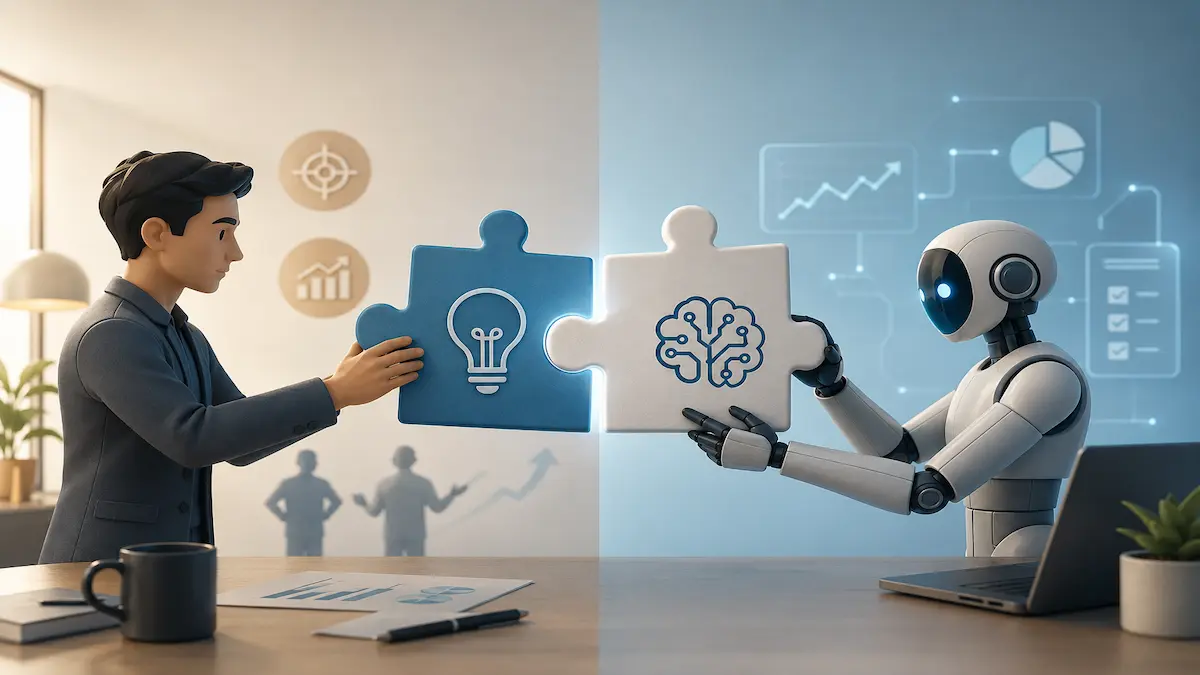
AI is remarkably good at the instruments. It isn't the thing deciding what to play. That's precisely why the skill hasn't gotten less valuable as AI has gotten better; if anything, it's become the differentiator. Once everyone on a team can pull the same instant analysis from the same tool, the person who knows what question to ask it, and what to actually do with the answer, is the one who moves things forward.
Back to That Tuesday Morning
Remember the shoe, the cold coffee, the eleven extra minutes? After spending enough time thinking this way at work, a lot of people eventually turn the same instinct on their own life without really meaning to. Instead of guessing why mornings were chaotic, this same clinic manager finally just watched one for a week, the way you'd watch any process before touching it. It turned out the bad mornings weren't random at all: they mostly landed on days when lunches got packed that same morning instead of the night before. One small change, and mornings became boring in the best possible way.
Nobody sets out to learn Lean Six Sigma to fix school mornings. But once "is this actually a pattern, or am I just reacting to whatever happened most recently" becomes a habit of mind, it doesn't stay confined to the office. Meal planning gets less chaotic. Errands stop happening in three separate trips because nobody paused to batch them. That's not the reason to learn this, but it's a genuine, unadvertised side effect of getting good at it.
Time Is Money, and Stress Is the Interest You Pay on It
"Time is money" gets said so often at work that it's easy to stop hearing it, but it's just as true at home, and the two aren't as separate as they feel. Eleven wasted minutes every weekday morning is over 45 hours a year, every single one of them spent rushed, irritated, and running late before the day has even started. That's not a productivity statistic. That's stress your body is carrying around for no reason, on top of whatever the actual day throws at you.
The same math runs in the other direction at work. A clinic that fixes its scheduling gap isn't just protecting revenue on a spreadsheet; it's giving staff back the hours they used to spend apologizing to frustrated patients and scrambling to catch up. Less firefighting is less burnout. A process that runs the way it's supposed to is, in a very literal sense, a calmer place to work. That's the actual case for this: not a certificate on a wall, but fewer days that feel like they're constantly on fire, whether that fire is at the office or in your own kitchen at 7:41 on a Tuesday.
Where People Get This Wrong
The mistake isn't ignoring AI, and it isn't leaning on it too hard either. It's mistaking a fast, confident-sounding answer for an actual decision. The AI can tell you wait times went up and offer a plausible reason why. It can't tell you whether that's this quarter's real priority, whether your team will actually go along with the fix, or whether it's worth what it costs. Treat the output as the outcome, and you end up with a beautifully analyzed problem that never actually gets better.
So, Is Learning Lean Six Sigma Still Worth It?
Yes. Here's the actual reasoning, not a sales pitch: the methodology itself hasn't changed just because AI showed up. Lean Six Sigma was never about marching through a fixed roadmap for its own sake. It's a toolbox, and the point has always been picking the right tool for the moment. AI has genuinely earned a permanent spot in that toolbox. For a lot of the tool work itself, the calculating, the pattern-spotting, the first-pass drafting, it can now do the job with barely any human involvement at all.
But running the tools automatically isn't the same thing as actually improving anything. What's changed isn't whether the methodology works. It's what a practitioner actually spends their time on. Framing the real problem instead of the first one that shows up in a report, understanding what the customer actually needs rather than what's easiest to measure, reading the context a spreadsheet can't see, checking that a suggested cause is actually the cause and not just a correlation, getting the people affected by a change to actually go along with it, weighing which tradeoffs are worth making, redesigning how the work actually flows, and making sure a fix survives past its first good week: none of that runs on autopilot. It's still a fundamentally human job, and it's the whole reason this way of thinking is worth learning rather than something you can outsource to a chatbot.
That's what actually saves the hours, lowers the stress, and turns "AI told us to do this" into a decision an organization, or a household, can actually trust. AI hasn't made that job smaller. If anything, it's made it the entire job, because the analysis part is now cheap and instant for everyone, and knowing what to do with it is what separates the people and organizations that actually improve from the ones that just generate a lot of impressive-looking reports.
Frequently Asked Questions
1. Has AI made Lean Six Sigma certifications less valuable?
Not really. It's changed which parts of the work take the most time. AI can now handle a lot of the raw calculation and pattern-spotting that used to take longer, but interpreting results, deciding what's worth solving, and getting a team to actually change hasn't gotten any easier. That judgment is what certification training focuses on, and it hasn't been automated.
2. Can AI replace a Lean Six Sigma practitioner?
AI can replace some of the manual analysis a practitioner used to do by hand. It can't replace the judgment calls about which problems matter, how to navigate the people and politics around a change, or whether a fix is actually worth its cost. Those remain human decisions.
3. What parts of process improvement is AI actually good at?
AI is strong at analyzing large datasets quickly, spotting patterns or anomalies, and drafting starting points like a rough process map or a first-pass list of possible causes. It's a fast, tireless assistant for the analysis stage of the work.
4. What parts of process improvement still require a human?
Deciding which problem is worth solving, understanding the organizational and human context behind the data, building buy-in for a change, and weighing whether a fix is worth its cost all remain human judgment calls that data alone can't make.
5. Does Lean Six Sigma only apply to work?
No. The underlying habits, like looking for patterns instead of guessing and understanding variation before reacting to it, tend to carry over into personal routines like meal planning, errands, and daily schedules just as naturally as they apply at work.
6. Is it still worth learning Lean Six Sigma if I already use AI tools at work?
Yes. AI tools and Lean Six Sigma thinking solve different problems. AI speeds up analysis; Lean Six Sigma is what tells you which analysis is worth running, how to interpret it, and how to turn it into a change that actually sticks.
7. What's the biggest mistake people make when combining AI with process improvement?
Treating a fast, confident-looking AI answer as if it were already a decision. AI can describe what's happening and suggest a likely cause, but deciding whether it's the right problem to solve, and whether the fix is worth doing, still requires human judgment.
8. Does this actually save time, or is it just one more thing to learn?
It pays back the time it costs. A process that keeps breaking in the same place quietly eats hours every week, whether that's staff re-doing work or a household re-solving the same morning problem over and over. Spending time once to find the actual pattern, instead of reacting to it fresh each time, is what gets those hours back.